Ebook
Currently, when you have another concept to pick the book, what you can do? It will certainly be better and also easier to locate in this website due to the fact that we give you the straight link to most likely to guide site. It will be much easier and also faster to obtain it. Below, soft file will truly assist you to conserve and also read it every time you desire. Of course, it will not limit you to review it in certain place.
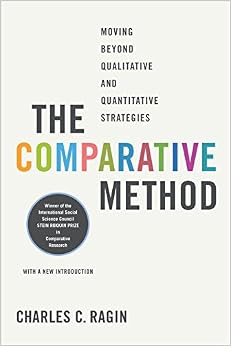

Ebook
Exactly how can you alter your mind to be much more open? There lots of resources that could aid you to improve your ideas. It can be from the other encounters and tale from some people. Reserve is one of the trusted sources to obtain. You could find so many books that we share right here in this site. As well as now, we reveal you one of the most effective, the
is what we at to share to you. This publication will certainly not obligate you to even read guide specifically. It will be done by using the right selection of you to believe that reading is constantly required. With the smooth language, the lesson of life is presented. Even this is not the particular book that you most likely like, when reviewing the book, you could see why many people enjoy to read this.
This is not only about the perfections that we will offer. This is also regarding what things that you can concern with to earn much better concept. When you have various principles with this book, this is your time to fulfil the impacts by reviewing all web content of guide. is additionally one of the windows to get to and open up the globe. Reading this publication could aid you to discover brand-new globe that you might not find it previously.
So, all individuals who review will certainly seem like doing the important things on their own. It depends on how the readers look and think about this publication. But, typically, it actually features the amazing thoughts of guide analysis. It will certainly likewise give you the impressive systems of creative thinking. Naturally, it will offer you far better concept of excellences. It is why we always offer you the best book that can make your life better. Currently, feel the life to get the amazing means of publication accomplishment.
Product details
File Size: 2923 KB
Print Length: 217 pages
Page Numbers Source ISBN: 0520280032
Publisher: University of California Press; 1 edition (July 18, 2014)
Publication Date: July 18, 2014
Sold by: Amazon Digital Services LLC
Language: English
ASIN: B00KYLNGG0
Text-to-Speech:
Enabled
P.when("jQuery", "a-popover", "ready").execute(function ($, popover) {
var $ttsPopover = $('#ttsPop');
popover.create($ttsPopover, {
"closeButton": "false",
"position": "triggerBottom",
"width": "256",
"popoverLabel": "Text-to-Speech Popover",
"closeButtonLabel": "Text-to-Speech Close Popover",
"content": '
});
});
X-Ray:
Not Enabled
P.when("jQuery", "a-popover", "ready").execute(function ($, popover) {
var $xrayPopover = $('#xrayPop_42B44BB0565311E99A94031F5914F189');
popover.create($xrayPopover, {
"closeButton": "false",
"position": "triggerBottom",
"width": "256",
"popoverLabel": "X-Ray Popover ",
"closeButtonLabel": "X-Ray Close Popover",
"content": '
});
});
Word Wise: Enabled
Lending: Not Enabled
Screen Reader:
Supported
P.when("jQuery", "a-popover", "ready").execute(function ($, popover) {
var $screenReaderPopover = $('#screenReaderPopover');
popover.create($screenReaderPopover, {
"position": "triggerBottom",
"width": "500",
"content": '
"popoverLabel": "The text of this e-book can be read by popular screen readers. Descriptive text for images (known as “ALT textâ€) can be read using the Kindle for PC app if the publisher has included it. If this e-book contains other types of non-text content (for example, some charts and math equations), that content will not currently be read by screen readers.",
"closeButtonLabel": "Screen Reader Close Popover"
});
});
Enhanced Typesetting:
Enabled
P.when("jQuery", "a-popover", "ready").execute(function ($, popover) {
var $typesettingPopover = $('#typesettingPopover');
popover.create($typesettingPopover, {
"position": "triggerBottom",
"width": "256",
"content": '
"popoverLabel": "Enhanced Typesetting Popover",
"closeButtonLabel": "Enhanced Typesetting Close Popover"
});
});
Amazon Best Sellers Rank:
#869,983 Paid in Kindle Store (See Top 100 Paid in Kindle Store)
As a PhD candidate, I heard about 'the Comparative Method' a while ago when I studied methodology. I thought I'd give 'the Qualitative Comparative Analysis (QCA)' a try. I have not yet gotten to later books developed by Ragin, where elaborates on QCA and 'the fuzzy sets' . Thus, this review judges this book by itself.Has it convinced me that 'the Qualitative Comparative Analysis (QCA) is important? It certainly seems so. He spends the first half of the book, as well as the last chapter, defending the QCA method, which is supposed to take strengths from both the qualitative and quantitative methods. That is, while variable-oriented approach is limited by simplified conceptions of cause, the case-oriented approach is limited by its inability to address large numbers of cases. The QCA is supposed to be the middle-road between the two extremes. It is supposed to allow investigators both to digest many cases and to asses causal complexity (p.168).Convinced? I certainly found that Ragin's desire to bridge the qualitative and quantitative approaches was valid. He develops good arguments from Chapter 1 to 5 why the current approaches are inadequate, including combined strategies (which use both qualitative and quantitative methods simultaneously).The evaluation of the QCA is that it holds a lot of promise. Chapter 6 develops basic concepts that help you understand the Boolean algebra, which Ragin exemplifies with simple data. The problem comes with Chapters 7 and 8, which are respectively supposed to describe 'extensions of boolean methods' and 'show real-life examples'. In practice, Ragin rushes through these chapters, throws us into the water, without teaching us how to swim properly. What do I mean? With table 8 onwards, he begins addressing procedures of complex examples. However, he skips many steps, making it untraceable how he develops resulting formulas. If you follow the steps from Chapter 6, you will see that you are encountering a complex situation which was not addressed earlier. Instead of explaining all the steps or a complex example, Ragin simply jumps from the beginning to the "final result". Consider, on p.119, where he throws this formula:(T)(R') = (B + aCd) (AB + CD) = AB + BCDAs a matter of fact, tracing steps outlined in Chapter 6, should lead us to this equation AB + BC +aC, not AB + BCD (verified by two other people).So what is going on? You never find out, because Ragin never addresses the rules of his method in the complex examples. This is sign of a poorly developed methodological structure - whereby the reader cannot follow all the steps. The argument he makes is that the book is too small to describe details. However, he spends a lot of time re-addressing issues with other approaches, as well as showing similar examples, without even once addressing how he works with complex formulas. This is a major weakness which makes this book a poor guide to QCA.That said, the book has its own uses. For very simple examples, this is a good introduction to the QCA. It will enable you to understand the goals of QCA, its strengths and weaknesses. However, for exact procedures, you will have to rely on Ragin's latter publications.
This is what I used to do my dissertation and I highly recommend this to researchers using qualitative methods; more public health researchers should try QCA.
Good!
I recommend this book because him is an approach which can used in many areas. Despite the first edition, this is amazing!
Ragin's classic on comparative analysis is a must for any sociologist or social scientist more generally. Raing spends his early chapters discussing some problems of current (at the time) methodologies: too unlike reality, too focused on independent effects of variables, not configurational enough. Then, Ragin presents his argument for getting beyond the qualitative/quantitative divide by introducing a different method of mathematical analysis of comparative data: Boolean Algebra. By coding for the presence or absence of certain factors, Boolean Algebra allows for the assessment of collections of variables (like interaction terms, only more complex) and seemingly brings together mathematical precision and qualitative depth.While there are certainly some problems with the book (what on earth are the cases we are considering and how does one select them? How do we determine what are salient "variables" to include in the "truth tables"? etc.), it remains a classic of methodology and the corner stone of the methods that Ragin continues to develop (QCA, Fuzzy Sets, etc.). This is a must for most social scientists. Otherwise, it will make for dry reading.
PDF
EPub
Doc
iBooks
rtf
Mobipocket
Kindle


