Free Ebook Unhinged: The Trouble with Psychiatry - A Doctor's Revelations about a Profession in Crisis
Downloading and install the book Unhinged: The Trouble With Psychiatry - A Doctor's Revelations About A Profession In Crisis in this web site listings could provide you a lot more advantages. It will certainly reveal you the very best book collections as well as finished compilations. Numerous books can be located in this website. So, this is not only this Unhinged: The Trouble With Psychiatry - A Doctor's Revelations About A Profession In Crisis Nonetheless, this publication is referred to review because it is a motivating book to offer you more opportunity to obtain experiences and also thoughts. This is easy, read the soft file of the book Unhinged: The Trouble With Psychiatry - A Doctor's Revelations About A Profession In Crisis as well as you get it.
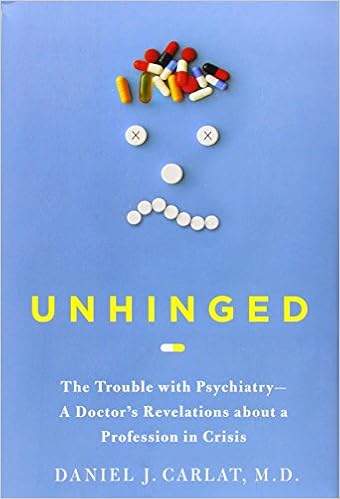
Unhinged: The Trouble with Psychiatry - A Doctor's Revelations about a Profession in Crisis

Free Ebook Unhinged: The Trouble with Psychiatry - A Doctor's Revelations about a Profession in Crisis
Unhinged: The Trouble With Psychiatry - A Doctor's Revelations About A Profession In Crisis. Is this your leisure? What will you do then? Having spare or leisure time is quite incredible. You can do everything without pressure. Well, we intend you to spare you couple of time to review this e-book Unhinged: The Trouble With Psychiatry - A Doctor's Revelations About A Profession In Crisis This is a god e-book to accompany you in this downtime. You will certainly not be so hard to know something from this book Unhinged: The Trouble With Psychiatry - A Doctor's Revelations About A Profession In Crisis More, it will certainly help you to obtain far better info and also encounter. Even you are having the terrific tasks, reading this publication Unhinged: The Trouble With Psychiatry - A Doctor's Revelations About A Profession In Crisis will certainly not add your thoughts.
As one of the home window to open the new globe, this Unhinged: The Trouble With Psychiatry - A Doctor's Revelations About A Profession In Crisis provides its impressive writing from the writer. Released in among the prominent authors, this publication Unhinged: The Trouble With Psychiatry - A Doctor's Revelations About A Profession In Crisis turneds into one of one of the most needed publications recently. In fact, the book will not matter if that Unhinged: The Trouble With Psychiatry - A Doctor's Revelations About A Profession In Crisis is a best seller or not. Every book will constantly offer ideal sources to obtain the viewers all finest.
What do you think about this publication? Are you still perplexed with this book? When you are really interested to read based upon the title of this book, you could see how guide will offer you several points. It is not just about the how this book problem around, it has to do with exactly what you can take from the book when you have actually reviewed. Even that's just for few pages; it will certainly help you to offer extra inspirations. Yeah, Unhinged: The Trouble With Psychiatry - A Doctor's Revelations About A Profession In Crisis is really incredible for you.
When providing Unhinged: The Trouble With Psychiatry - A Doctor's Revelations About A Profession In Crisis as one of the collections of many publications right here, we assume that it can be one of the very best publications noted. It will have several fans from all countries readers. As well as exactly, this is it. You could truly expose that this book is what we thought in the beginning. Well currently, let's seek for the various other publication title if you have actually got this book review. You may locate it on the search column that we offer.
Review
"Unhinged is a searingly honest and articulate account of modern psychiatry's failure to think outside the box of psychopharmacology in treating patients." (Alison Bass, author of Side Effects: A Prosecutor, a Whistleblower and a Bestselling Antidepressant on Trial,winner of the NASW Science in Society Award for 2009)“A psychiatrist looks deeply into the mirror and takes stock of his profession and what it has become. Whether you are a patient, student, trainee, clinician, or “KOL” (key opinion leader”), this frank and insightful book will definitely make you think.” (Erick Turner, M.D., Department of Psychiatry and Center for Ethics in Health Care, Oregon Health & Science University)"Unhinged provides crucial insights for anyone who cares about the future of Psychiatry. Must reading for psychiatrists and patients alike." (Keith Ablow, MD, author of Living the Truth)"Terrific book, terrific insights! Daniel Carlat is the kind of psychiatrist we wish we all had." (Manny Alvarez, MD, Senior Managing Health Editor at Fox News Channel)
Read more
About the Author
Daniel Carlat, M.D., is on the faculty of Tufts Medical School and did his psychiatric training at Harvard Medical School and Masschusetts General Hospital, where he was chief resident of the inpatient psychiatric unit. He has published several professional books and articles, and is currently the editor-in-chief of The Carlat Psychiatry Report (www.thecarlatreport.com), a monthly newsletter read by clinicians throughout the United States. He is also an occasional contributor to The New York Times Magazine, where he has published articles on psychiatric and medical topics. He lives in Newburyport, Massachusetts.
Read more
Product details
Hardcover: 272 pages
Publisher: Free Press; 1 edition (May 18, 2010)
Language: English
ISBN-10: 9781416590798
ISBN-13: 978-1416590798
ASIN: 141659079X
Product Dimensions:
6 x 1 x 9 inches
Shipping Weight: 15.5 ounces
Average Customer Review:
4.2 out of 5 stars
49 customer reviews
Amazon Best Sellers Rank:
#238,571 in Books (See Top 100 in Books)
It is good to see a doctor finally reflect on what has become of psychiatry. We need more champions for the art and science of psychotherapy. Daniel Carlat has made a good start by showing that psychiatry has become little more than a blind, often negligent, pill-pushing caste. Although he does see medication as having a place in treating mental illness he nonetheless acknowledges the dearth of true psychotherapy.I suspect such a book may not be popular among psychiatrists but truth is painful and it's high time someone came out to remind them what patients expect and deserve... real, humane treatment.Kudos to Dr. Carlat... now we need more whistle-blowers to shed true insight into just how damaging many of the meds are and that continue to be prescribed at an alarming rate.
It's not news that the profession of psychiatry is in a crisis state. There have been many books, articles, and blogs written criticizing psychiatry. There's no shortage of things to criticize. The fact that there is little understanding of the neurobiology of psychopathology, that there are no diagnostic tests for psychiatric disorders, that drugs have become widely prescribed with little evidence supporting their long-term efficacy, that most psychiatrists have become exclusively pill pushers, eschewing the need to understand and connect to their patients beyond a 15 minute med check, and that many psychiatrists have allowed themselves to be corrupted by drug money, are some of the problems with contemporary psychiatry.Daniel Carlat, in his book, provides an insider's look at the problems with psychiatry. Carlat was motivated to pursue a career in psychiatry because of his depressed mother's suicide. Carlat did his residency at Massachusetts General Hospital (MGH), beginning in 1992, after the introduction of second generation antidepressants like Prozac. Although his supervisors were divided between therapy and drug advocates, Carlat admits that "the main thing you learn in a psychiatric residency, then or now, is how to write prescriptions" (p. 34).After completing his residency, Carlat, like most psychiatrists of his generation, specialized in psychopharmacology, i.e. prescribing drugs. He saw patients for 15 to 20 minute medication visits. The reason why he and other psychiatrists did this was that it was more profitable. Seeing three patients an hour for med checks allowed him to make about $180 an hour minus expenses. Seeing one patient an hour for therapy allowed him to make between $80 to $100 an hour, which is about 50% less.Carlat talks about his experiences as a "hired gun," someone who is paid (i.e. bought out) by drug companies. Carlat worked for Wyeth Pharmaceuticals to promote the antidepressant drug Effexor to primary care doctors. He made $750 per talk. He describes that although he was officially an "expert consultant," in reality he was basically a highly-credentialed salesman. Sales reps attended his talks, and they communicated to him via body language and other feedback whether he was doing what they expected of him, i.e. to promote their product. When he tried to be more balanced and neutral, they criticized him. He eventually gave up his hired gun position.Carlat describes his own experiences as a target of the pharmaceutical marketing machine. Ambien, a sleeping pill marketed by Sanofi-Aventis, was going off patent soon. Safoni-Aventis wanted doctors to prescribe Ambien CR ("Controlled Release"), a longer-acting drug than the original. Carlat was skeptical of the science behind the new pill. Valerie, his drug sales rep, knew that he wasn't prescribing much Ambien CR. Valerie was persistent, offering a free medical textbook as a gift. Carlat prescribed Ambien CR to a patient, subconsciously or consciously reciprocating Valerie's gift. The patient didn't like the drug due to a hangover side effect. Carlat didn't tell his patient that he prescribed Ambien CR as a favor to a drug rep.Carlat talks about the overdiagnosis of psychiatric disorders. The DSM-IV, the "bible" of psychiatry, classifies mental disorders based on a list of symptoms. If you have five of the symptoms it mentions, you have depression. If you only have four, you don't have depression. Since this symptom-based diagnosis is ultimately based on subjective or arbitrary factors, there is no way to prevent multiplication or redefinition of disorders.The problems with the DSM also affect clinical practice. For example, bipolar disorder is a diagnosis in the DSM based on symptoms such as alternating manic and depressive episodes. This diagnosis was intended for adults and older teenagers. Joseph Biederman and his colleagues at MGH decided to expand the diagnosis of bipolar disorder to toddlers. In 1996, Biederman published a paper reporting that nearly a quarter of children he was treating for ADHD also met his criteria for bipolar disorder. His diagnostic change led to a forty-fold increase in the number of children and adolescents treated for bipolar disorder.What is Carlat's prescription for change in his broken profession? Carlat wants psychiatrists to go back to providing therapy, which can be balanced with medications. 15 minute medication checks are not sufficient to get to know a patient, to know what makes him tick. Sometimes changes in symptoms are not due to medications but life changes or stresses. Since most psychiatrists don't have time to inquire about anything other than symptoms and medications, they are blind to what is going on in their patients' lives. Carlat changed his own practice from exclusively 15-20 minute med checks, to somewhat longer medication sessions (20- 25 minutes), alternating with 45 minute therapy visits. He doesn't use traditional psychodynamic therapy, but instead "a version of supportive therapy that I now try to weave into the fabric of all my sessions with patients, whether they are seeing me primarily for medications or for therapy" (p. 199).Carlat assumes that drugs are effective. In his book, he gives a number of case examples of patients whom he says were helped by medications he prescribed. But how does he know that? His conclusions about drug effectiveness are based on his own clinical observations, which derive from 15 to 25 minute appointments. How can he, or any other psychiatrist, make any conclusion about effectiveness based on such short patient visits, and in the absence of any objective lab tests?In conclusion, this book is a well-written, honest account of systemic problems in psychiatry written by someone with an insider's perspective on the profession. Carlat does an excellent job describing the drug money corruption in psychiatry, in the overmedicalized view of a complicated phenomenon such as mental illness, and in the need for psychiatrists to better know their patients and provide some of them with therapy. He fails, however, to go far enough in questioning drug efficacy.
This is a great story regarding the selling of the psychiatric industry. Dr. Carlat does a great job explaining the problems with modern psychiatric drug trials, the immense problem with conflict of interest among the "researchers" and offers some ideas for how to change. It's important that medicine is as nonbiased as possible and we get back to finding what is best for our patients lives, and not about padding our pocket books. Thank-you, Dr. Carlat
I would recommend this book to anyone interested in the field of psychiatry. It brings to light the controversies that plague the profession. It offers solutions. It is very easy to read but also engaging. It is educational. I enjoyed reading this book.
What an eye-opener! This is for ANYONE who is visiting a doctor for emotional problems. The trend in this area is to "medicate", without much effort in solving your problem! BEWARE!
I enjoyed this book for its honesty about what the flaws are of psychiatry and for the hope it provides for the future of the field.
An eye opening reminder of what has become of the medical profession. It is a perfect representation of the evolution of what used to be a "helping profession" into one focused on making money in addition to dependent clients.Highly recommended for anyone in or entering mental health, but I may also purchase a copy for my general practitioner as well!
Dr. Carlat discusses the breakthroughs and drawbacks of modern psychiatry. His main criticism is the shift from therapy to psychopharmacology within the field, in which doctors no longer offer hour-long therapy sessions for their clients, favoring the 15 minute "med check" model instead. Carlat also sheds light on the issue of drug industry influence on doctor's research and prescription habbits, including Carlat's own experience as a paid spokesman for Wyeth (makers of the Effexor antidepressant) and the pressure put on him by the company to influence other doctors' opinions about the drug.I found it to be a very interesting book, I had trouble putting it down!
Unhinged: The Trouble with Psychiatry - A Doctor's Revelations about a Profession in Crisis PDF
Unhinged: The Trouble with Psychiatry - A Doctor's Revelations about a Profession in Crisis EPub
Unhinged: The Trouble with Psychiatry - A Doctor's Revelations about a Profession in Crisis Doc
Unhinged: The Trouble with Psychiatry - A Doctor's Revelations about a Profession in Crisis iBooks
Unhinged: The Trouble with Psychiatry - A Doctor's Revelations about a Profession in Crisis rtf
Unhinged: The Trouble with Psychiatry - A Doctor's Revelations about a Profession in Crisis Mobipocket
Unhinged: The Trouble with Psychiatry - A Doctor's Revelations about a Profession in Crisis Kindle
No comments:
Post a Comment