PDF Ebook Freud, Adler, and Jung: Discovering the Mind (Discovering the Mind Series)
Linking to the net nowadays is additionally really simple as well as straightforward. You can do it through your hand phone or device or your computer system gadget. To begin getting this publication, you can go to the link in this site and obtain what you want. This is the effort to obtain this impressive Freud, Adler, And Jung: Discovering The Mind (Discovering The Mind Series) You might locate lots of type of publication, yet this amazing publication with very easy way to find is really rare. So, never forget this website to search for the various other book collections.
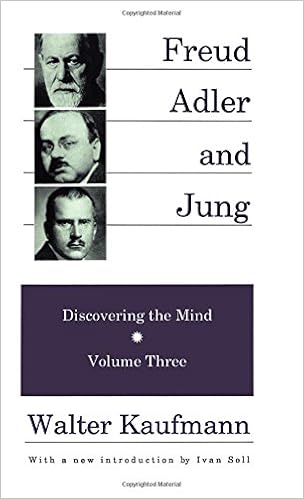
Freud, Adler, and Jung: Discovering the Mind (Discovering the Mind Series)

PDF Ebook Freud, Adler, and Jung: Discovering the Mind (Discovering the Mind Series)
Do you require new referral to accompany your spare time when being at home? Reviewing a publication can be an excellent selection. It could spare your time usefully. Besides, by checking out publication, you could enhance your understanding and also experience. It is not only the scientific research or social knowledge; numerous things can be obtained after reading a book.
By only linking to the internet as well as discover the web link that we always supply in every page, you could subsequent guide to get. They remain in the soft documents programs. Currently, we will introduce you Freud, Adler, And Jung: Discovering The Mind (Discovering The Mind Series) as a reading publication today. We are really sure that this publication will certainly be actually meaningful for you as well as people around you. As lots of people in other areas, they have taken this publication as their analysis collection. So, we suggest to you to obtain additionally this book.
Sooner you get guide Freud, Adler, And Jung: Discovering The Mind (Discovering The Mind Series), quicker you could enjoy reading guide. It will certainly be your count on maintain downloading and install the publication Freud, Adler, And Jung: Discovering The Mind (Discovering The Mind Series) in supplied web link. In this method, you could truly decide that is offered to obtain your own book on-line. Below, be the initial to obtain guide qualified Freud, Adler, And Jung: Discovering The Mind (Discovering The Mind Series) as well as be the initial to recognize how the author suggests the notification as well as understanding for you.
By this condition, you might not need to be worried. This publication will certainly assist you in obtaining the very best resource of your problem and also readiness. Also this publication is a brand-new coming publication, it will certainly not males that the passion is less. You could compare with the various other book with exact same topics. It's really competitive. So, what's taking place? Let obtain and also review Freud, Adler, And Jung: Discovering The Mind (Discovering The Mind Series) immediately.
About the Author
Walter Kaufmann (1921-1980) was professor of philosophy at Princeton University from 1947 until his death. He had visiting appointments at Columbia, Cornell, the University of Michigan, and the University of Washington among others. His books include The Future of the Humanities, Religion from Tolstoy to Camus, and the three volume series entitled Discovering the Mind.
Read more
Product details
Series: Discovering the Mind Series
Paperback: 494 pages
Publisher: Transaction Publishers; Transaction edition (January 1, 1992)
Language: English
ISBN-10: 0887383955
ISBN-13: 978-0887383953
Product Dimensions:
6 x 1.2 x 9 inches
Shipping Weight: 1.6 pounds (View shipping rates and policies)
Average Customer Review:
4.3 out of 5 stars
9 customer reviews
Amazon Best Sellers Rank:
#224,139 in Books (See Top 100 in Books)
This book takes an interesting perspective on three very influential men in the counseling and psychology fields. The author seems to have a bit of an affinity for Freud, and therefore seems slightly protective of his memory; willing to find any inconsistencies the the stories of Adler and Jung to support the integrity of Freud. However, the stories he reports about all of the men and their lives are very enthralling, if not somewhat incomplete. This book provides a good introduction to these men and their work.
Very engaging. Well worth reading.
no issues
Again his approach in this volume is to demonstrate how these individuals (Fraud, Adler, and Jung) came to provide a clearer understanding of human reasoning and basic psychology. With the three considered in this volume I feel that Kaufmann failed to fully develop this theme with Adler and Jung. The book is mainly focused on Fraud and his impact. However, Kaufmann goes into the background of all three.His coverage of Adler and Jung is more of a demonstration of their animosity toward Fraud that became clearly manifest later in their careers. He goes into detail on the reasons and the lasting damage to Fraud’s reputation due to what Kaufmann considers the false and malicious charges against Fraud’s character and teachings. He goes into great detail and a considerable analysis of the reasons and the background leading to these attacks.I had hoped to find a more balanced examination of these three and their impact on western psychology and philosophy. I would recommend to any interested in Fraud and the professional interactions confronting his career and eventual reputation.
Walter Kaufmann was a professor of Philosophy @ Princeton university. As such, it might seem odd that he wrote a study on 3 of the pioneers of psychology. This is book 3 of the DISCOVERING THE MIND series that he wrote. The first 2 reviewed 5 Philosophers and one literary giant (Goethe, although I realize Goethe was a great deal more than that). As someone who has a degree in Philosophy, I understand that there are folks in the psychology field who may be skeptical of listening to a Philosopher. After all, there are a great many "turf battles" between the 2 disciplines. Rest assured that Kaufmann's agenda is not to "pick a fight" with the psychology field over the intellectual distribution-of-labor.What becomes immediately obvious is that Sigmund Freud is the hero of this book. Granted, Kaufmann does challenge some of Freud's thoughts & theories, but he earns the highest praise. Adler & Jung are both described as being insolent & jealous malcontents to their master. While I had always admired Jung, Kaufmann's unflattering view of him has caused me to reconsider my assessment. Also, Jung was guilty of anti-Semitic views which I was unaware of. Even more disturbing is that their impetus seemed to be his disdain for Freud. Not cool!!I will admit that some of the letters exchanged between Freud & Jung I found to be quite comical as they were trying to "weaponized" their theories and use them to psycho-analyze each other. That said, for people who either in the field of psychology, interested in the history of psychology or people who are simply curious about the development of intellectual ideas over time, this series is worth a gander. Agree with him or not, Kaufmann was a wise man & has the cerebral chops to engage in the subject matter presented herein.
Good work, well worth reading, about seminal figures in the development of psychology.Sigmund Freud is considered to be the father of psychoanalysis, which is a psychotherapeutic treatment that attempts to alleviate certain mental and emotional disorders. Because of his revolutionary theories promulgated around one hundred years ago, Freud has become one of the most influential and controversial figures of modern times. Freud was the first scientist to propose that one’s thought processes were largely guided by forces in the normally inaccessible, unconscious mind. He believed that this unconscious mind was a collection of mental images or constructs that constituted the foundation of one’s psyche. Freud asserted that people’s difficulties in mentally processing these images in an effective manner gave rise to neuroses and phobias.Freud suggested that many mental disturbances could be moderated through processes of free association and dream analysis. In free association, the analyst follows one’s linkage of thought patterns, ultimately uncovering the basal, repressed image at the end of the chain. Dream analysis explores recurring images in dreams, which are often sublimations of repressed thoughts. The goal of Freud’s psychoanalytic therapy was to bring the troubling, repressed images fermenting in the unconscious, into the light of the conscious mind, thus converting a potentially crippling neurosis into an unhappy memory.In Freud’s theory, he divided the mind into components, one conscious, and two unconscious. The Id is the subconscious repository of basic instincts and desires. It is essentially greedy, self-serving, and amoral. The Superego is an unconscious, moralistic conscience which discourages the Id from processing thoughts into actions outside the realm of acceptable social behavior. It is often psychologically stern, severe, and punishing. The Ego is the conscious mechanism which attempts to attain some workable balance between the drives of the Id and the restrictions of the Superego.Freud further proposed that many psychological difficulties stemmed from repressed sexual anomalies. He felt that in development from an infant to adult, the Libido (which was psychic, sexual energy) had to progress successfully through several stages for maturation into a normal, functioning adult. These stages were oral, anal, and phallic. If progression of the Libido were arrested at any stage of this process, due to the occurrence of psychically traumatic events, and then repressed within the unconscious, the person’s development into a successfully coping adult would be hindered. The truncation of this progression could be reversed by the processes of free association and dream analysis.Some notable working constructs that Freud invented include: the Oedipus complex – where the son desires to murder his father and marry his mother; the Electra complex – where the daughter wants to murder her mother and marry her father; Thanatos – the death wish; and penis envy – which purported why women (at that time, circa 100 years ago) tended to feel inferior to men (this theory is now discredited as being an artifact of the Patriarchy). While much of Freud’s work is now considered to be somewhat archaic, his contribution to the development of modern psychology cannot be underestimated.Carl Jung was a Swiss contemporary of the Austrian, Freud, although he was younger by almost twenty years. He was initially mentored by Freud, and was considered by other psychoanalytic practitioners to be a main proponent in the furtherance of the master’s work. However, Jung’s views eventually diverged so much from Freud’s that after a tempestuous colleagueship, they permanently parted ways.Jung was never comfortable with Freud’s fixation upon sexuality and infantilism. Instead, he developed an analytical theory of personality derived from studies of myth, art, and religion. He believed that psychological aberrations could be resolved by bringing the unconscious and conscious minds into a more holistic balance. He felt that one’s psychic development was a constant interplay between both conscious and unconscious inner forces processing memories of past, and experiences of present, external forces. His work also postulated the existence of a species-based, collective unconscious, the symbols and archetypes of which were ubiquitous to all humankind. Jung’s goal of analytical psychology was for the individual to attain his or her holistic persona, the self, through the process of individuation – the unification of differentiated personality components into a functional, stable whole.As did Freud, Jung considered the unconscious element of the psyche to be its most active component. However, he did not assume that repressed sexual instincts were prime movers of the unconscious. He felt that aspirations, desires, and fears, as well as repressed sexual instincts could all have a significant impact.Jungian working concepts include: the unconscious – both personal and collective; archetypes – universal symbols for ideas; self-realization; neuroses; extraversion and introversion; animus – unconscious masculine components in women; anima – unconscious feminine elements in men; and the shadow – the rejected qualities of the conscious mind.In his later years, Jung claimed that in his counseling practice he used his analytical psychoanalysis 1/3 of the time; Freudian methods 1/3 of the time; and an Adlerian approach for the balance. This tends to indicate that interpersonal differences call for flexibility in assuaging problems of the mind and its projected personality.Practical differences between Freud and Jung include: Freud believed that religion was a fallacy, while Jung asserted that it provided a safe place for the individual during the process of self-discovery; Freud saw individual unconscious as being specific to a person… Jung believed this to be only half-true, and that each person had access to shared images and archetypes common to all members of his or her species; and Freud asserted that many psychological difficulties stemmed from repressed sexual desires, while Jung felt that the more important issue was the unconscious mis-regulation of emotions and experience.Alfred Adler was another Austrian contemporary of Freud. He also eventually had a falling out with Freud. Adler founded the school of individual psychology, where the entirely unique individual was considered in terms of his or her environment. He maintained that psychological issues stemmed from an individual’s feelings of inferiority derived from thwarted attempts at self-assertion. His method called for assessment of the areas of personality development, strivings towards interpersonal superiority, psychological health, and the unity of personality. Adler’s thesis stated that everyone was striving to overcome innate feelings of inferiority to attain feelings of superiority. He felt that a well-adjusted person was one who lived in an environment of encouragement, feelings of adequacy, meaning, and positive self-esteem.He developed a construct of fictional finalism, which asserted that every person was aware of the image of his or her perfect self, although this image may not be understood. Adler stated that all desires, aspirations, goals, and life ventures were made in accordance with one’s own fictional finalism. He believed that both the conscious and unconscious minds worked together to generate this characteristic, the main thrust of which did not alter over one’s life. Adler classified people into one of four mental types: ruling – who likes to be in charge; getting – who goes along with the flow; avoiding – who act as loners to avoid defeat; and socially useful – who foster socially beneficial behaviors and work for the best interests of the community. He believed that birth order affected one’s psychological type and his or her outlook on life, and position in society. Also important were one’s life style, parental education, and one’s own values clarification. Adler’s psychology stressed practicality in mental health wellness (also, aberrational treatment and prevention), and its practice welcomed input from lay persons, as well as practitioners.Adlerian therapy involved work with the individual, as well as with family members, or members of a therapy group. The goal of this therapy was to instill in clients positive feelings of self-worth and confidence that would foster cohesive interpersonal relationships and social empowerment.From Freud, we learned that many internal forces which shape our lives are unconscious. Things which we often believe to cause us psychological difficulties are already in a cognitive state and therefore, are not at issue: only those traumatic events which have been repressed and pop into our consciousness through irrational anxieties or recurring images in dreams are the likely culprits. Jung taught us that the holism which we see in natural processes also applies to a well-balanced mental state. To be happy and lead rewarding lives, we must always seek a harmonious compensation of our internal forces. Adler showed us that we are unique individuals who function best with a positive self-esteem. We should continually strive to surround ourselves with positive personality builders, and avoid or overcome those situations deleterious to our sense of well-being.
Kaufmann continues his examination of the development of depth psychology, primarily (over the whole series) from Goethe and Hegel to Nietzsche, and from Nietzsche to Freud. All Jungians should read and carefully digest this text. Kaufmann gives compelling examples of Jungs ideas and methodology, revealing sloppy thinking and scholarship. (E.g., the meanings of Jung's terms, especially the "Shadow", change from one book to the next.)
Freud, Adler, and Jung: Discovering the Mind (Discovering the Mind Series) PDF
Freud, Adler, and Jung: Discovering the Mind (Discovering the Mind Series) EPub
Freud, Adler, and Jung: Discovering the Mind (Discovering the Mind Series) Doc
Freud, Adler, and Jung: Discovering the Mind (Discovering the Mind Series) iBooks
Freud, Adler, and Jung: Discovering the Mind (Discovering the Mind Series) rtf
Freud, Adler, and Jung: Discovering the Mind (Discovering the Mind Series) Mobipocket
Freud, Adler, and Jung: Discovering the Mind (Discovering the Mind Series) Kindle
No comments:
Post a Comment